
The End of the ‘Pure’ Handicap? Why the 2026 WHS Changes are Making Golf More ‘Boring’ (And Why That’s Good)
Go to any golf club lounge in Singapore or Malaysia right now, and you’ll hear the same thing: “The Handicap System is broken.” Whether it’s the guy playing off an 18 who just shot a net 65, or the “vanity capper” who hasn’t broken 100 in two years, the World Handicap System (WHS) is the most controversial topic of 2026. But as we move further into the 2026 season, it’s becoming clear: the system isn’t broken—it’s just finally becoming “Boring.”
The April 2026 Shift: Math over Ego
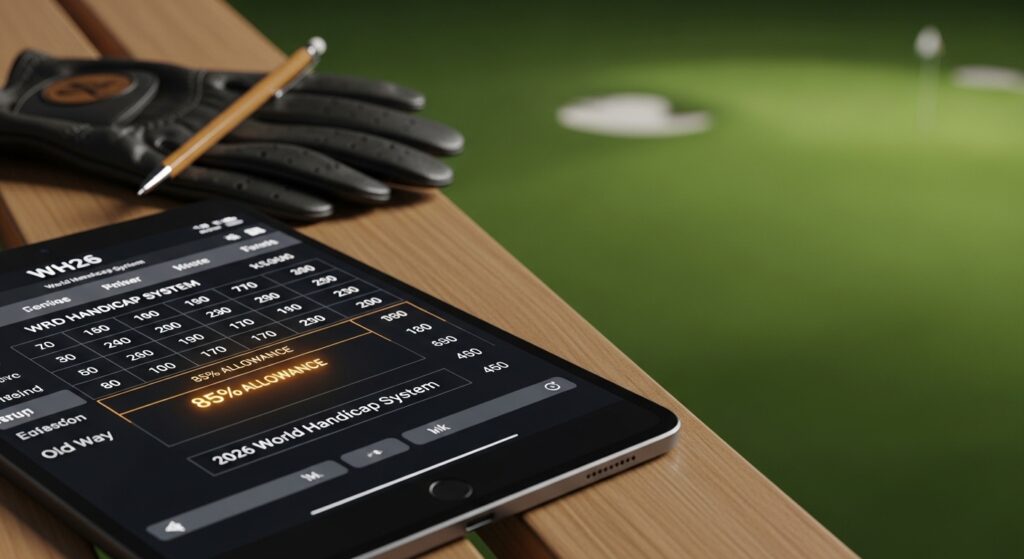
The latest refinements from the R&A and USGA have introduced more frequent Playing Conditions Calculations (PCC) and standardized the 85% Allowance for many social competitions.
To the traditionalist, this feels like “manipulation.” But for those of us following the Boring Golf philosophy, it’s actually a gift. Here’s why:
- The “Expected Score” Reality Check: In 2026, if you walk off the course after 13 holes due to a tropical downpour at Desaru Coast, the system now uses an “Expected Score” based on your current Index rather than just giving you “net par.” It’s more accurate, less volatile, and frankly, a bit more humbling.
- Standardization of Par: The 2026 push to standardize par across different tee sets means you can finally compete fairly against your buddies, regardless of whether they are playing from the Tips or the Seniors’ tees.
- The 85% Buffer: Many tournament organizers circle are now adopting the 85% allowance for Stableford. This effectively “clips the wings” of the occasional outlier round and rewards the golfer who grinds out a consistent score.
Why “Boring” Math Saves Your Wallet
A “Pure” handicap is often a vanity project. We want the lowest number possible to feel like better players. But a vanity handicap is expensive. It leads to:
- Tournament Entry Fees: Paying to play in events where you have zero chance of winning because your index is “potential-based” rather than “average-based.”
- Lost Side Bets: Giving strokes you can’t afford to give.
By embracing the WHS’s move toward stability, you’re aligning your game with the same logic we use for Zero Torque Putters. You are removing the “junk data” and focusing on the shots you actually hit 8 out of 10 times.
The 2026 Checklist for a “Boring” Handicap:
- Post Every Score: Even the bad ones. The 2026 WHS is designed to “cap” your upward movement, so don’t fear the blowup round.
- Understand Course Rating minus Par: This is the big 2026 change. Your Course Handicap now accounts for the difference between the Course Rating and the Par. If the course is harder than par, you get more strokes. Use them wisely!
- Check the PCC: If the wind was howling at Hai Phong, check your app the next day. The 2026 PCC is more sensitive and might give you that extra stroke you earned in the gale.
The Verdict
The 2026 WHS changes aren’t trying to punish the “Elite” or reward the “Sandbagger.” They are trying to make the game predictable. And in golf, predictable is another word for Boring. In a sport where we spend thousands chasing “explosive” distance, maybe it’s time we spent a little more time appreciating the “boring” beauty of a handicap that actually works.